
Taking stock of where the sector stands, hearing directly from builders and homeowners, Constructive’s insights help shape conversations and the industry.

Across two days at Auckland’s Aotea Centre, the Kiwi construction sector came together to share ideas, challenge thinking and look at what we can do differently. From the big issues shaping construction to practical lessons businesses can put into action, Constructive once again created space for the conversations and connections that help move our sector forward.
One of the key moments each year is the release of Master Builders’ State of the Sector research. For over a decade, Constructive has provided the platform to take stock of where the sector stands, hear directly from builders and homeowners, and use those insights to help frame the conversations that follow.
State of the Sector: Holding our ground
This year’s results painted a mixed but encouraging picture. While market conditions remain tough, pipelines are strengthening and homeowners continue to report positive building experiences.
68% of Master Builders report strong or steady pipelines, up from 64% last year, while critically diminished pipelines have nearly halved from 11% to 6%
Cost and demand remain major pressures, with 93% identifying rising construction costs and 87% weaker consumer demand
91% of recent homeowners would recommend building, up from 88% last year
75% experienced no significant delays
57% completed their project within or under budget
The numbers suggest recovery is starting to take shape, but it remains uneven. Finance, cost and customer confidence are still influencing whether projects move ahead, so builders are continuing to adapt and find ways to keep work moving.
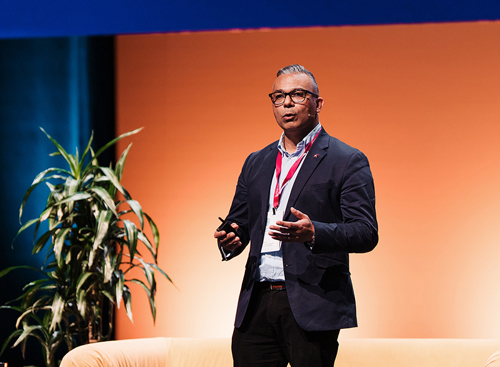
“Conditions are still difficult, but our members are holding their ground,” Master Builders CEO Ankit Sharma said.
“Many Master Builders have been through economic cycles like this before. They understand how to manage risk, respond early and keep their businesses focused through a challenging period.
“The important point is that the work has not disappeared. Pipelines are holding up, and builders remain more confident about their own businesses than they are about the wider economy and construction market.
Rising construction cost remains the most widely reported pressure, identified by 93% of respondents, while 87% identify weaker consumer demand as an issue.
Sharma said those pressures made it even more important to distinguish between difficult market conditions and a lack of work.
“A pipeline does not automatically become a viable project. Customers still need certainty around finance, cost and timing before they can commit.
“That is why confidence matters. Builders need customers who feel comfortable proceeding, and homeowners need confidence that they can get a quality project delivered.”
Homeowners give building a strong vote of confidence
The strongest positive signal in this year’s research comes from more than 600 people who recently built a new home or completed a major residential project with a Master Builder.
91% would recommend building to others, up from 88% last year. 75% experienced no significant delays, while 57% completed their project within or under budget.
Sharma said the results should give confidence to New Zealanders considering a build.
“91% of recent homeowners would recommend building. That is a very strong endorsement, particularly after several years of difficult economic conditions.
“For people who are ready to build, the message from those who have recently been through the process is encouraging. Most are getting through their projects without significant delays, and the overwhelming majority would recommend the experience to someone else.
“There never is the ‘perfect’ time to build. But these results show that homeowners are having good experiences and that capable builders are ready to work with customers to turn their plans into reality.”
Communication remains central to a successful build, and when things do go wrong, poor communication can quickly add to the uncertainty and frustration.
The builder sits at the centre of that relationship. 63% of homeowners turn to their builder for information, making builders the most-used source of guidance through the building process.
“Builders aren’t just there to deliver the home. For most customers, they are the person helping them understand the process, what is happening next and what decisions need to be made,” Sharma said.
“That brings real responsibility. When something changes or a problem arises, good communication can be the difference between an issue being managed well and a customer losing confidence. Clear, regular conversations about cost, timing, changes and expectations are fundamental to a successful build.”
Removing unnecessary uncertainty
Consenting remains one of the most significant areas where that uncertainty can be reduced. 68% of builders say their projects have been affected by consenting delays, and among homeowners who experienced significant delays, consenting was the main cause.
“We support high standards, but achieving those standards should not require unnecessary cost, delay or inconsistency,” Sharma said.
“A clearer and more proportionate consenting system would help builders deliver more efficiently and give homeowners greater certainty about when their project will start, what it will cost and when they can move in.
“The sector has weathered a difficult period, and its forward workload has held up. We now need to make it easier for viable projects to move from intention to delivery.
“And for New Zealanders thinking seriously about building, the experience of recent homeowners should give them confidence to have that conversation with a Master Builder.”
In election year: What the sector heard
With the election approaching, Constructive heard directly from Government and Opposition leaders about their priorities for housing, infrastructure and building reform.
Infrastructure Minister Hon Chris Bishop emphasised value for money, better asset management and the importance of a more enduring infrastructure pipeline. Labour leader Rt Hon Chris Hipkins, joined by Arena Williams, spoke about governing in an increasingly proportional MMP environment and the need to work across political lines. Building and Construction Minister Hon Simon Watts outlined a focus on simplifying the building system, improving affordability and providing greater certainty.
Together, the sessions gave the sector a timely view of the different approaches being put forward ahead of the election.
Reading the recovery
One of the most engaging and practical sessions came from ANZ Chief Economist Sharon Zollner, who cut through the economic noise to explain where the recovery is really at.
Her message was cautiously positive: Inflation has eased, balance sheets are in better shape, and businesses expect conditions to improve, but the recovery will remain uneven.
The practical takeaway was clear: The recovery is happening, but it will not move in a straight line. Businesses need to be ready for continued uncertainty and plan accordingly.
What strong businesses are doing differently
Master Builders Chief Executive Ankit Sharma and business strategist Nigel Collin turned the focus to what builders can control, drawing on lessons from their national listening tour with successful construction businesses.
Two themes consistently stood out among businesses navigating the market well: knowing your numbers and looking after your relationships. Successful business owners are strengthening operations, investing in their people, sharing knowledge and finding practical ways to innovate.
Connection was another recurring theme. Making time to learn from others can uncover ideas and opportunities that are hard to see when you are solving problems alone.
Practical tools for stronger businesses
Constructive also continued its focus on practical sessions that builders can take back into their businesses.
Building a business that can run without you
Luke Kemeys challenged business owners to think about succession long before they are ready to step away. See the resources here.
Warning Signs: What liquidators want you to know
Lara Bennett and John Fisk drew on decades of restructuring and insolvency experience to unpack what sits behind construction businesses getting into trouble. See the resources here.
Other highlights on the main stage and some quotes to remember include:
Former Trade Minister and New Zealand Ambassador to the United States Tim Groser brought a global perspective to changing trade relationships, geopolitical uncertainty and what they could mean for New Zealand.
At the Women in Leadership Lunch, entrepreneur Cecilia Robinson shared a candid perspective on what really sits behind building successful businesses. She said, “Great entrepreneurs are actually great risk managers rather than risk takers.”
And Zion Armstrong closed Constructive with a powerful message about leadership, confidence and creating cultures where people are prepared to contribute:
“If you give them a platform and an opportunity to contribute, it can genuinely change your entire culture.”
Brian Dillon, Chief Executive, Construction Growth Foundation commented on the event, saying, “Congratulations to Master Builders on another successful Constructive. The event creates an important opportunity to look beyond the immediate construction cycle and consider what will make our sector stronger over the long term.
“This year’s conversations reinforced the need to keep investing in the capability of our people and preparing for what the next construction cycle will demand. These are priorities at the heart of the Construction Growth Foundation, and Constructive provides a strong platform to bring the sector together to tackle those challenges collectively.”


 Copy link
